_5.png "BIG IT JOBs logo")
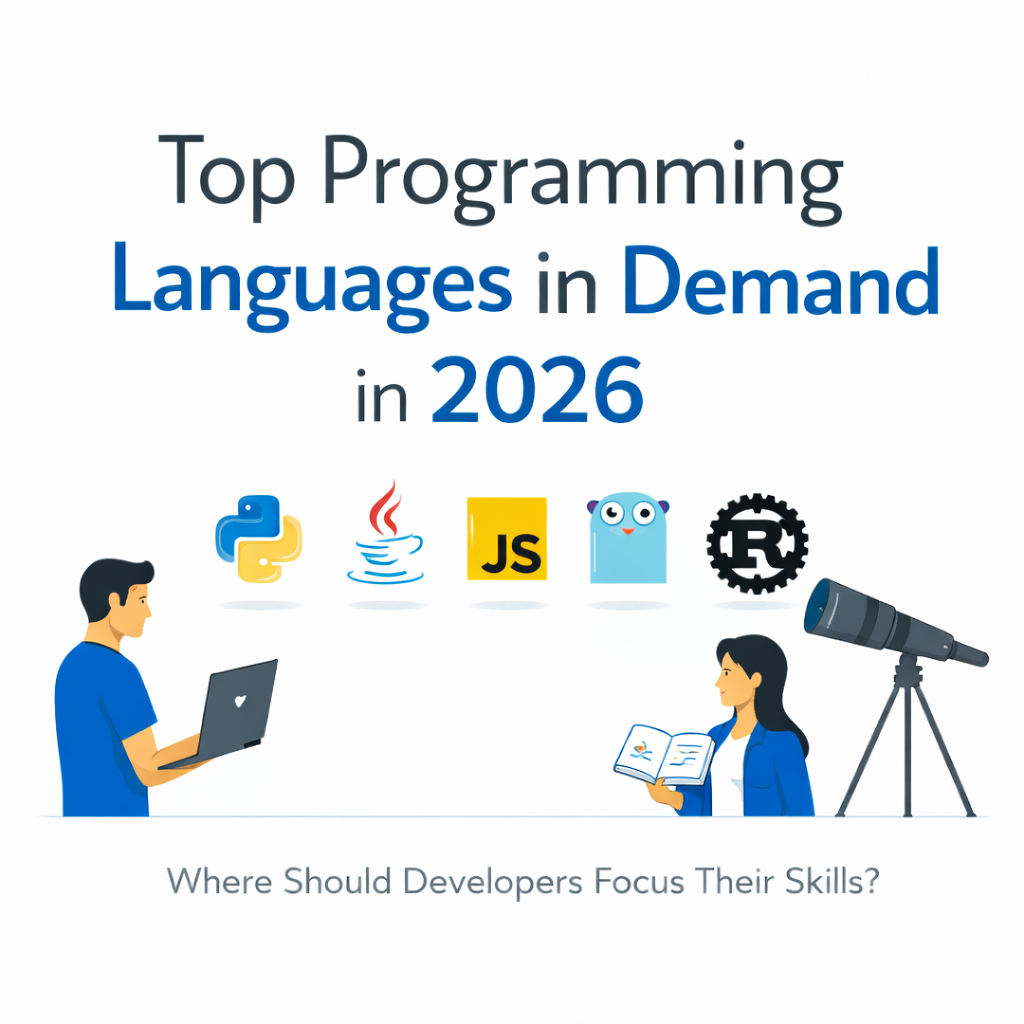
Technology moves fast - so fast that programming languages can rise and fall in popularity like waves in an ocean. For developers navigating their careers, choosing the right language to learn is a bit like selecting the right sail for a long voyage.
In 2026, several programming languages will continue to dominate the tech landscape, powering everything from cloud platforms and artificial intelligence to mobile apps and enterprise systems.
Understanding these trends can help professionals align their skills with the direction the industry is heading.
Python: The Swiss Army Knife of Programming
Python continues to hold a powerful position in the tech world. Known for its simplicity and versatility, Python has become the Swiss Army knife of programming languages.
It plays a major role in fields like artificial intelligence, machine learning, automation, and data science. Its large ecosystem of libraries allows developers to build complex solutions with relatively simple code.
Companies working on AI, analytics, and automation frequently seek developers who are comfortable using Python to transform raw data into meaningful insights.
Java: The Backbone of Enterprise Technology
Despite the rise of new languages, Java remains a cornerstone of enterprise software development.
If modern technology were a city, Java would be the reinforced steel framework supporting its skyscrapers. Large-scale banking systems, enterprise applications, and backend infrastructures continue to rely heavily on Java due to its stability and scalability.
Organizations that manage complex systems often prefer Java because of its long-term reliability and extensive developer ecosystem.
JavaScript: The Language of the Web
JavaScript continues to dominate the web development landscape. From interactive websites to full-scale web applications, JavaScript has evolved into the engine powering the modern internet.
With frameworks like React, Angular, and Vue, developers can create dynamic user interfaces and responsive applications that run seamlessly across devices.
JavaScript’s influence has expanded beyond browsers as well. With technologies like Node.js, developers can build backend services, APIs, and even real-time applications using the same language.
Go and Rust: The Rising Contenders
As technology evolves, newer languages like Go and Rust are gaining attention.
Go is widely used in cloud infrastructure and distributed systems due to its performance and simplicity. Many cloud-native tools and microservices rely on Go for efficient execution.
Rust, on the other hand, is known for its focus on performance and memory safety. Developers building high-performance systems, game engines, and low-level applications increasingly turn to Rust as a modern alternative to traditional system programming languages.
The Future of Programming Skills
While individual languages matter, companies today are increasingly looking for developers who can adapt and learn continuously.
Programming languages are tools, and the most successful engineers treat them like instruments in a toolbox - selecting the right one depending on the problem they need to solve.
Platforms like BigITJobs often reflect these market trends, showcasing opportunities across different technologies and helping candidates understand which skills companies are actively seeking.
For developers planning their next career move, learning the right programming language is like planting a seed. With the right choice and consistent growth, that seed can grow into a thriving career in the ever-expanding forest of technology.
Weekly newsletter
Get the latest blog updates, practical hiring insights, and featured reads delivered straight to your inbox.
Read about our Privacy Policy.